
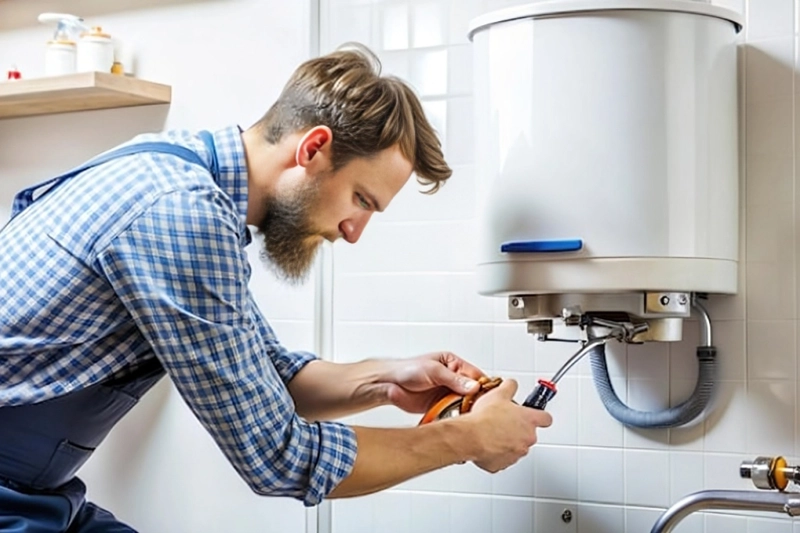
Water Heater Repair Weymouth MA for Reliable Hot Water
A shower that turns cold halfway through can disrupt the entire morning. Water around the tank may damage flooring, while popping sounds, rusty water, or uneven heat can signal internal wear. These problems need inspection before a small fault becomes a costly failure.
Graham Plumbing provides water heater repair in Weymouth, MA for properties with lost heat, slow recovery, leaks, or unstable temperature. We inspect the system before replacing parts. That includes the thermostat, heating elements, burner assembly, pilot system, thermocouple, gas valve, anode rod, dip tube, electrical connections, and temperature and pressure relief valve.
Our repair visit focuses on findings that support a sensible choice:
- Test water temperature, power supply, gas flow, and heating response.
- Check the tank, fittings, shutoff valve, drain valve, and supply lines for leaks.
- Look for sediment buildup that can reduce heating speed and raise energy use.
- Review unit age, repair history, tank condition, and remaining life.
- Confirm safe operation after the needed part is repaired or replaced.
Some units need a part change. Others have tank corrosion or repeated failures that make replacement the better value. We explain the difference before work begins, so you know what the system needs and why. Our 24/7 emergency availability helps when a failed heater stops daily routines or threatens property. Same-day scheduling helps families, tenants, staff, and customers return to normal use sooner.
Water Heater Systems Sized Right for Your Home
An undersized heater can run out during back-to-back showers, while an aging tank may use more fuel and still recover slowly. Repeated breakdowns and rising utility costs often show the current unit no longer matches the property.
For dependable water heater installation in Weymouth, MA, we select equipment for actual demand. We review household size, fixture count, peak use, fuel source, available space, first hour rating, recovery rate, venting needs, and incoming water conditions. Commercial properties also need capacity that supports staff, restrooms, kitchens, cleaning, or tenants without long delays.
A sound installation includes important details:
- Remove the old unit and prepare secure connections for the new heater.
- Match gas, electric, or tankless equipment to the building and daily demand.
- Install shutoff valves, drain pans, vent parts, unions, and discharge piping correctly.
- Add an expansion tank where closed system pressure needs controlled movement.
- Set temperature controls, fill the system, check for leaks, and test delivery.
Duane Graham brings more than 30 years of experience to equipment choices and installation planning. That background helps us spot weak connections, poor vent routes, pressure concerns, or sizing errors before they shorten the new unit’s life. We also explain maintenance needs, warranty information, and operating settings that support steady performance. The result is a heater that fits the property, handles expected use, and avoids paying for capacity you do not need.
Keep Tankless Water Heater Performance Steady
Long waits for hot water, tankless error codes, weak flow, or sudden temperature drops can interrupt busy homes and workplaces. Mineral scale can coat the heat exchanger, blocked inlet screens can restrict water, and poor flow settings can stop ignition.
Our Weymouth water heater services include tankless installation and maintenance. We assess flow rate, simultaneous fixture use, temperature rise, fuel capacity, electrical load, vent layout, condensate drainage, and service access. An undersized model may struggle during shared use, while an oversized model can add cost without improving comfort.
Tankless maintenance covers key heat and flow parts:
- Flush and descale the heat exchanger to remove mineral deposits.
- Clean inlet filters and check flow sensors for accurate activation.
- Inspect ignition parts, burners, venting, and combustion performance.
- Review error codes, temperature settings, isolation valves, and condensate lines.
- Test several fixtures to confirm stable output.
Traditional tanks benefit from planned routine care. Flushing can reduce sediment, anode checks can reveal corrosion risk, and valve testing can support safer pressure control. For sudden loss of heat, our water heater repair in Weymouth, MA is available alongside replacement and tankless care.
Graham Plumbing is licensed and insured, serving both residential and commercial clients. We keep recommendations tied to the unit’s condition, property demand, and cost of continued repair. Call (857) 260-9777 for same-day scheduling or 24/7 help with an urgent water heater problem.
Water Heater Repair and Replacement Services
Contact a Weymouth Plumber for Fast Help
What Sets Your Water Heater Repair Service Apart
Choose the Right Size Water Heater for Your Use
Before choosing equipment, we calculate hot water demand, recovery needs, fuel type, and available space, making water heater installation in Weymouth, MA fit daily use.
Ensure Safe Water Heater Installation and Venting
We check venting, pressure control, drain routing, fuel connections, and electrical load, helping the new water heater start safely and operate without avoidable daily strain.
Understand Your New Water Heater Controls and Care
After installation, we explain temperature settings, basic upkeep, warranty coverage, and early warning signs, so you can use the unit correctly from the first day.
Water Heater Repair Questions Homeowners Ask
Black particles often come from aging rubber connectors, a damaged tank lining, or debris trapped inside the heater. We identify the material before choosing a repair. Damaged connectors may be replaced without changing the entire unit. Internal tank damage may call for another option.
Moisture on the outer surface may come from condensation rather than a plumbing leak. We dry the unit and track where the water returns. Condensation often fades as the stored water warms. A steady wet area may indicate a hidden tank seam failure.
A breaker may trip because a heating part has shorted, wiring has overheated, or moisture has reached the electrical area. During water heater repair in Weymouth, MA, we test the circuit and isolate the faulty part. We replace only what causes the overload. The heater is restarted after its electrical draw remains stable.